
The soft hydraulic module of the WaterSed model can simulate four types of soft hydraulics : fascine, hedge, grass strip and pond/buffer basin.
1. Hydrological functioning
Each soft hydraulics is described using 4 parameters.
- Width (m)
- Infiltration capacity (mm/h)
- Manning’s coefficient (s.m-1/3)
- Volume (m3)
Incorporating soft hydraulics into the model involves modifying the input grids of the model, on the cells where the soft hydraulics are located.
Infiltration capacity.
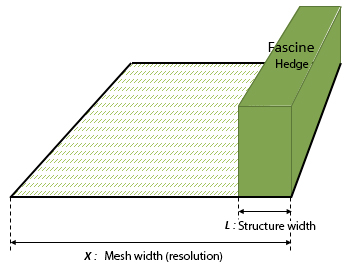
The final infiltration capacity IC’i (mm/h) is calculated proportionaly structure width structure L and the DTM resolution X.
If the width of the structure is less than the resolution of the DTM :

With :
ICi : initial infiltration capacity of mesh i (mm/h)
ICAMGi : infiltration capacity of the layout (mm/h)
L : width of the layout (m)
X : DTM resolution (m)
If the width of the structure is greater than or equal to the resolution of the DTM, then :
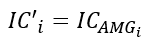
This method is applied to all soft hydraulics : fascine, hedge, grass strip and pond/buffer basin.
Imbibition
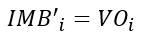
For a fascine, hedge or grass strip mesh, the final imbibition IMB’i (mm) is that of the initial imbibition grid IMBi (mm), used as model input :

For a pond/buffer basin cell, the initial imbibition value IMBi (mm) is replaced by the structure volume VOi (mm). This numerical trick makes it possible to artificially dig a well which volume is that of the structure.
Water storage capacity of the soil
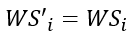
For a fascine, hedge or grass strip cell, the final soil water storage capacity WS’i is that of the initial soil water storage capacity WSi (mm), provided as input to the model.
For a pond/buffer basin cell, the final soil water storage capacity WS’i (mm) is the sum of the initial soil water storage capacity WSi (mm) and the volume of the structure VOi (mm).

Manning’s coefficient
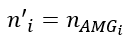
For the four types of soft hydraulics, the final Manning coefficient n’i corresponds to the Manning coefficient of the layout nAMGi.
2. Sedimentary functioning
For the four types of soft hydraulics, the concentration of SPM in runoff water SPMi (g/l) and the erodibility ERODi (-) is equal to 0.
Fascine / Hedge
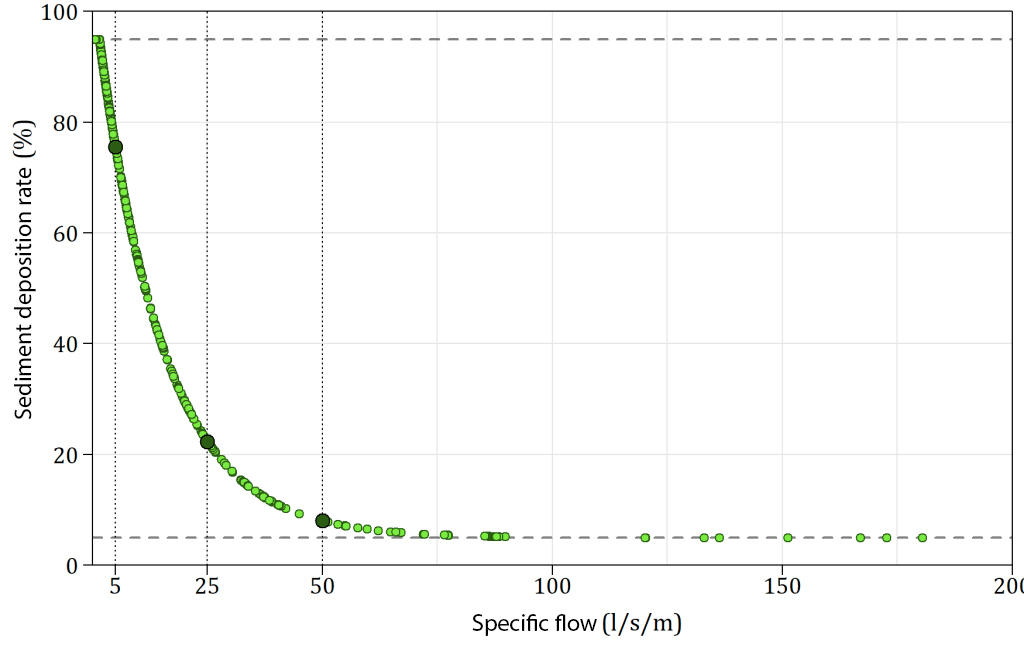
For fascines and hedges, an empirical equation has been developed on the basis of AREAS work. The sediment transfer rate TTi (-) is a function of the specific water inflow QSi (m3/m/s). The equation is as follows :

The transfer rate was bounded between 0.05 and 0.95 since these structures can’t trap/transfer 100% of the sediment flux. Based on this transfer rate, the sediment deposition rate TDi (-) is determined according to the equation :

The relation is shown in the figure below. The greater the specific inflow QSi, the lower the sediment deposition rate TDi is.
Pond / Buffer basin
The sediment transfer rate of a basin is a function of the volume of runoff Vi (m3) entering the structure.
If the volume of runoff leaving the structure Vi (m3) is greater than the storage volume of the structure VOi (m3), the sediment transfer rate TTi (-) is :

If the runoff volume Vi (m3) is less than or equal to the storage volume of the structure VOi (m3), the sediment transfer rate TTi (-) is equal to 0.
Grass strip
The sediment transfer rate of a grass strip is determined using the model’s transport capacity equation. Increasing the Manning’s coefficient across a grass strip (between 0.15 and 0.3) reduces the transport capacity and thus increases sediment deposition.

 WaterSed